This blog has moved to blog.dinogane.com
Read More >> |
| Until you test the hypothesizes on which your business plan is based, you don’t know how crazy these hypothesizes really are. |
This was not the first time I was speaking to consumers. I had previously spoken to some end consumers in March. A Marketing Research Methods class had also done further interviews during the Spring Quarter. Both of these sets of interviews were more exploratory in nature. In this third iteration of interviews, my main goal was to present some fleshed out ideas and also, where appropriate, demo the prototype that a software engineering class from the Spring Quarter had completed.
I spoke to researchers in industry both in person and over the phone. One these researchers had recently become a victim of the downsizing that many R&D labs have been undergoing due to the recession. Meanwhile, another firm boasted that they were spending more on R&D than ever before. A particular woman I spoke to on the phone exclaimed that she had an awful employer – her only reason for speaking to me must have been to warn me away from ever working there. Perhaps most extraordinary was meeting someone who had attended the same middle school as me in the UK. The varieties of circumstances were fantastical. Driving on the "wrong side of the road", the travel was exhausting too.
Perhaps because all the academics I spoke to were based at Northwestern, there was less variation in the circumstances of the academics. It was clear that some professors were superstars and had carte-blanche autonomy to do as they pleased. The administrative staff seemed at times to struggle with this. It transpires that consulting is something that is discouraged, though in some areas parts of the university it is rampant. Academia also has interesting and divergent priorities to industry, particularly with respect to publishing intellectual property.
I’m still digesting what I’ve learned from all these interviews, but one thing is clear: the hypothesizes that my business idea is based on do completely hold. The incentives are not completely aligned. For some people the conflicting priorities of what academia and industry prefer stifles the creation of value that I propose for both parties. However, I am not completely dismayed. I believe this is part of the process. After a previous iteration of talking to consumers, I refined my target customers from anyone in industry to researchers in industry. Following this set of interviews, and the latest feedback, I now need to refine another part of the business plan. My only worry is whether I'll run of time and money before I have a business that holds up when the hypothesizes it is based on are tested.
Read More >>
 |
| "At least we don't have to do the cleaning," says one of the interns. |
My first job out of undergrad was as a software developer. In that role, I would often work with software testers - people who would go through and test all the functionality of the software that we developed, making sure it all worked perfectly. During the early part of this week, this was exactly what I was doing. As we polished up the first iteration of a prototype developed by a software engineering class during the Spring quarter, I've been getting my hands dirty making sure it all works perfectly for when it comes to demo.
Later on in my career, as I moved into managing software development teams, I would sometimes peer over the wall towards the sales team and watch them trying to develop new sales leads - so the software development teams would have something to develop. Developing customers is how I spent the latter part of the week, sending out numerous emails and making calls. This was all with the purpose of setting up meetings with the types of people who may be our customers. We want to test our assumptions against these end consumers to ensure it has value for them.
The end consumers we are targeting are of two varieties: researchers in academia and researchers in industry. The academics have been relatively easy to meet with - the professors at Northwestern have been pretty open to meeting. The researchers in industry have not been as open. I've been using the Northwestern Alumni directory to reach out to these folk, but often the contact details are wrong. Secondly, when I do get through to the alums, they will often not be inclined to help. This is a learning process though, and I'm getting a better sense of the approach I should take.
Through all this, I've developed a minor health problem, which has been affecting my level of positivity. A less than positive mental attitude signals all the wrong things to the rest of the team (the interns), as well as the people I meet. Part of this game has to be projecting confidence and believing success will come - creating the virtuous circle where confidence and success reinforce each other. So I've turned to music to keep my spirits up; it has been surprisingly effective. We might be doing the "worst" jobs, but at least we can do them the way we want to, playing music in the office that we want to. This week, it's a lot of AC/DC.
Read More >>
 |
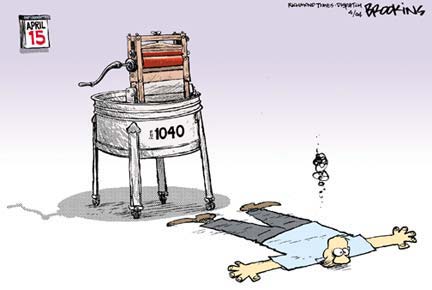
| My startup is incubated on the top (attic) floor of Fisk Hall, the home of Northwestern's Medill School of Journalism. |
My focus this past first week has been on getting things set up, as well as team-building. I've hired two software engineering students from Northwestern's McCormick School of Engineering as interns for the summer. Out of my keenness to get them on board with the mission, I had us all review the team-related slides from the MORS430 (Organisational Behavior) course. A highly rated course at Kellogg, I genuinely believe in the importance of this stuff.
The MORS430 course explains the differences between high-performing and low-performing teams. For example, in high-performing teams there are clear divisions of responsibility in the team. There is also greater emphasis on co-ordination of activities than any one person leading. Also, as we learned in a Lego game during the course, the better the team does in initial planning, the quicker and easier the team finds it in ultimately executing the necessary activities. Thankfully, the interns thought the material to be as interesting as I do.
As much as this is the first week of a summer adventure, this is just the current phase of my ongoing project. This is the project I undertook, when I started business school, to start a new media venture. During the Spring Quarter I was fortunate enough to have a number of student teams take on my startup as part of their class projects:
- A software engineering class at the McCormick engineering school developed some mock-ups and a basic outline of the web-based service that we are building.
- A marketing research class at Kellogg (MKT450) completed market research on some of the end users that would use the service, developing some findings on their preferences and motivations.
- An entrepreneurial selling class at Kellogg (ENTR903A) developed a slide-deck and sales presentation for presenting the business to channel partners.
During the Winter quarter I was even more fortunate to have won funding, via Northwestern's Media Management Center, from the McCormick Journalism Foundation. This funding is what provides the financial support for the summer activities that I am now undertaking.
With all these past efforts from the Winter and Spring quarters, another part of "setting up" this first week has been getting together and shaping up what we already have, so that it is ready for use in the upcoming weeks.
At this stage it is difficult to say how these thirteen weeks will unfold, but it will perhaps be a more interesting ride than the MBA admissions process or even the first year of business school.
Read More >>
 |
| Spring quarter has started at business school, which means it is business plan season. |
The competitions rarely ask for a full business plan, as least in the early stages. Instead, an executive summary or abstract is asked for. Someone recently said to me that, in selling my business, I need a 1 minute pitch, 10 minute pitch and 45 minute pitch. These summary documents are analogous to the 10 minute pitches.
So I've been writing these "10 minute" summary versions of my business plan. As I write these documents, I realize that for every line in a one page document, there is probably tens of hours of work of work behind it. Yet this will not be apparent at all in reading the document. Take, for example, a line that says "a team from an undergraduate class will build a prototype". This line does not describe the other alternatives I had investigated and thrown away, such as looking to contract software engineers or developing relationships with researchers who might help build it. It will not even describe the pain experienced in some of these not working out.
At first, it is tearful to not unravel the full story behind the window dressing that is the business plan. But it is important to realize that the business plan is largely window dressing. I'm learning more and more that a business plan is not a document with intricate details that you design and create to carefully help you navigate yourself to your dream. It is not even an aid to help people understand how you will set up your business. A business plan is a marketing document. Its sole purpose is to convince people - to excite people into giving you whatever it is you need.
Though I have only entered two competitions thus far, I already feel that each competition helps iterate and refine my ideas - solidifying them, creating more punchy descriptions and ultimately improving what I'm working on. I'm looking forward to what my business plan will look like at the end of Spring quarter, at the end of the business plan competition season.
Read More >>

 |
| I've managed to assemble a few good mentors to help me develop my business. |
Before even starting at Kellogg, during the admit weekend (DAK), I took the opportunity to meet professors and others who might talk to me. During these conversations, I often managed to demonstrate my enthusiasm and interest, if not take their thinking in different directions. For the people that did not meet me, when school started, I was soon at coffee chats that they frequented. I was soon able to demonstrate my commitment, if nothing else.
As my ideas developed, becoming more realistic and tangible, then the moment of magic occurred - one of these people said, "that's a really great idea - I'd love to work with you on it". Pretty soon, the next person was saying, "wow - how'd you manage to get that person on board?". My credibility was increasing.
Through this continual process of seeking advice and demonstrating likability and credibility, I've now gained access to two valuable resources - a team that will help me prototype my idea (some undergrads) and some money. I hope to find the limits of this seeking advice/likability/credibility strategy.
Read More >>
 |
| Facebook founder Mark Zuckerberg created competitive advantage over other social networks by first creating a closed environment for just the students at Harvard. |
Southwest started life with the ambition to be the cheapest airline available. As a consequence, it developed resources (e.g. culture and processes) that meant costs were always kept low, comparative to other airlines. From the beginning, McKinsey prided itself on having consultants who were generalists - and the firm continues to have a generalist bias even as other firms use specialists to give them an edge.
Before there was Facebook, many social networking sites existed. However, Facebook was the first such site where users did not feel the need to be anonymous. As a consequence, it became far easier to find your friends and keep up with what they are doing. Facebook was able to achieve this because it first started as a closed system for use within universities. Within such a closed environment, it felt safe for the s initial users to reveal their identities. By the time Facebook became public, there was a critical mass of people who felt comfortable with exposing their identities online. Facebook was able to get its user base to reveal their identities - and thus create a key differentiator - because it spawned out of closed university environments where people felt it was safe to do so. Faceboook's competitive advantage was due to the unique resources (the university environment) that it had comparative to other social networks.
So, in starting up my own business, I'm utilising the resources that I have available to me at business school. I've spent a long thinking - what do I have available here that lets me build something that others can't? What is available here that let's me build something in a different way to which others have - enabling me to create some kind of competitive advantage? Perhaps it's the alumni network? Perhaps faculty? Perhaps students? Perhaps the buildings and facilities? Perhaps the student culture? As Facebook has shown, I believe the vastly different dynamics of a university to the outside world are sure to provide opportunities for new kinds of firms to flourish.
Read More >>

I spent the best part of ten days travelling up and down the Bay Area, from San Francisco to Santa Clara. ©
Following the VC trek, a number of Kellogg students (including myself) visited startups in the Bay Area. The companies visited were Fusion One, Cubetree, Minekey, Terrapass, Hollrr, Widgetbox and Engine Yard. We then joined Kellogg's official Entrepreneurship Trek, visting Chegg, the Plug and Play Incubator, SnapLogic, Founder Institute, Sinexus, Yammer, EventBrite, Bump, and Meebo. What follows are some "lessons learned" that the entrepreneurs shared with us.
It is better to build a business that exits for $25M - $50M than one that exits for $1B. Building a $1B business is very difficult and requires extraordinary luck and/or skill. It usually also requires a lot of investment and dilution of your shares. The venture capital firms are looking to build $1B businesses, yet very few businesses ever become $1B businesses. In the meanwhile, there are many $25M - $50M exits where the founders have walked away with as much returns as those who have in a $1B exit. These exits are easier to execute. VC firms will not invest in a business that wants to exit at $25M - $50M, but it is a more realistic goal to create such a business.
Many successful firms start out doing one thing, with little success, but then discover they have acquired all the resources needed to do something else really profitably. As an example, Chegg started out as a Craigslist type classifieds service for students. There were many competitors doing similar things, but the growth of the business was small. They then experimented with renting text books and found this was proving to be a popular service. They suddenly found that the resources they had from the classifieds business, such as students lists and on-campus champions, put them in the perfect position to execute on this business. There were similar stories of experimenting, building resources and finding eureka monetization moments at other companies also.
Milestones are important. When building your business, you need to set milestones for when you are going to accomplish certain things, e.g. get FDA approval for a drug, release feature X or acquire 1M customers. If you don’t reach a milestone, you have to ask yourself why this is not the case – is it because of motivation? Because of resources or skills? If you are not able to address the shortcomings to reaching your milestones, you need to revisit what your business can accomplish. Milestones are paramount when it comes to fundraising; to obtain the next round of funding, you need to accomplish the milestones that give confidence to the next round of investors.
Networking is key. Several firms had obtained substantial expertise from others, people that the founders had worked with before. One particular firm had for its first two corporate customers two of the founders’ best friends from earlier in life. An executive from at another firm had previously roomed with an executive from yet another. The Bay Area seems to be full of incestuous relationships such as these – particular circles of people that control money and other resources, which ultimately enable the startups to succeed or fail. The difference was clear between those startups where the founders are "plugged in" to particular networks, and those where the founders seemed to continue to struggle with little success.
Viral growth. A lot of startups in the consumer internet space focused on building products that could create viral growth – this was the predominant growth strategy. If the product is good enough, the product will create huge engagement, as well as customer acquisition, purely from the way it works. Bump, the iPhone application, is an example of a product with huge viral customer acquisition.
Start with a core team. A startup needs a core team of 2 or 3 people who are extremely capable, work well together and can deliver and iterate the product quickly. This creates momentum and pushes the startup forward to funding and traction.
Don't spend time convincing people they have a problem. Instead, focus on finding the people who are already convinced that they have a problem. In sales, in hiring or anything else, targeting these people is the most effective use of your time. Convincing people from scratch that the problem exists consumes a large amount of time and effort.
Corporate IT departments are gatekeepers preventing SaaS from becoming a multi-billion dollar business. IT departments, threatened by the flocking of technology to the cloud (and consequent redundancy of their jobs), are proving to be resistant to SaaS adoption. Ultimately, in the long run, SaaS will win through, but their resistance is slowing the pace of adoption.
Laser focus on customers means competitors are not as important. If you focus on a particular segment and satisfy their needs really well, you don’t need to worry as much about competitors. Your product will simply be the best thing for the customers you are targeting.
The most important thing is getting traction. If your product is getting traction, everything else will be easy – getting investors, hiring, mentors etc. If users are flocking to your product, all these other resources and people will come and find you.
Doing a startup is an emotional rollercoaster. Experienced entrepreneurs become numb to the ups and downs. You just have to accept it and learn to manage it.
Realise the phases of a startup and do what you are naturally good at. E.g. the early phase of bringing an idea together versus the phase of building a business – know in which phase your capabilities lie and focus on that, handing over to other people for other phases.
Read More >>

I spent two days on Kellogg's Venture Capital (VC) trek to the Bay Area. We visited a broad range of firms, from life science centric Alta in San Francisco to typical residents of Sand Hill Road, such as Battery. I've summarized my main take-aways from the trek into the broad areas of (1) startups and investing (2) hot areas of (high tech) investment (3) getting a VC job and (4) some other points. Many thanks to Windsor and Thupil for organizing.
Startups and investing.
If the area that you are looking at is trendy now, it is too late – the opportunity has already passed. You need to be ahead of the curve. The VC looks for people who have powerful market insights – people who know something more in the area than the average top tier person. The VC invests in people who they think can solve the problem in the area, not in a specific business plan.
Most sectors are cyclical. The question is how long is the cycle? For clean tech this could be 20 years, which is too long for a VC backed fund. When the VC invests, they have to believe the company can become a billion dollar company. They play for big hits, knowing only a small portion will become big hits.
Success happens to you. Only when you fail do you learn something. Doing something (e.g. a startup) and failing teaches you things that are invaluable about how startups work.
Hot areas of (high tech) investment.
Two areas of high tech investment stood out in particular across the firms.
Mobile: All the things that we needed on the Internet in 2000, we'll need on mobile in the not too distant future, e.g. payments, advertising, commerce. The opportunity is in figuring out how these things might work on mobile.
Enterprise: virtualization and cloud computing are hot in this area. In the past, to win money from enterprises, it was necessary to approach IT departments and win over large amounts of money for large contracts, e.g. a SAP implementation. What we are now seeing is individual business units buying SaaS software for small amounts of money, e.g. entry level SalesForce. Because the level of enterprise sign-off required for small amounts of money is low, it is easier to get these transactions done.
Getting a VC job.
Jobs at VCs usually open up as a need arises for particular skills or expertise. When that hole opens up at a VC firm, you have to be the right peg to fit that hole. Sometimes that openings won’t match your skillset. In the meantime, you have to keep developing yourself until the opportunity arises. You have to keep yourself at the top of VC’s minds, perhaps dropping them an email every quarter.
While you’re not yet working at a VC firm, you have to become an expert, perhaps in a particular domain or in human-issues of startups. You have to place a bet on what kind of skills will be useful in 2 or 3 years out, and start developing the skills for that area. Sales and operating experience are two generally very useful experiences for rounding out your skill-set.
Other points.
While fund sizes get bigger, the number of quality opportunities does not. In the future, the number of VC firms and the amount of money in VC will need to reduce if the industry is to return to reasonable returns.
In the meanwhile, VC firms are other ways to deploy this extra capital efficiently. For example, VC firms are building to Entrepreneur-In-Residence programs and using those to start businesses in which they own a much larger share than they might otherwise.
VCs come in all shapes and sizes, from very slick to the nerdy. The backgrounds of VC are very varied, and the stories of how they got into VC is just as varied.
For LPs, the most important thing to them is a VC being able to show them exits.
Read More >>

Thanksgiving break. Time to take a break from the wringer that is b-school life. ©
Kellogg has broken for the thanks-giving break. We now get a week away from school distractions before getting back and looking forward to final exams for the quarter. I feel slight relief. But I know that this feeling won't last long. What seemed like an ocean of time to get lots of things done suddenly only looks like a puddle. Here is a preview of what I have to get through over the next 9 days.
Organising meetings with companies. I'm going to be in the Bay Area over the second and third weeks of December. I'm going to be on two Kellogg organised treks, visiting tech companies and VCs in the area. There is some downtime between these treks, so I'd like to use this time to meet further companies that are doing things related to what I plan to do in future. Organising these meetings means emails and phone calls over the coming week.
Getting the school newspaper ready. My one (or main) extracurricular activity while at Kellogg will be running the school newspaper - I'm the paper's Editor-In-Chief for the year 2010. I feel that the paper, The Merger, has been a little too infrequent and that quite a few improvements can be made to the way it looks and how we deliver it. All this requires more work, and importantly, more money. Figuring all this out will be another task over this thanksgiving.
Assignments. There are numerous assignments that are due the week after thanksgiving. Some of these are not worth too much, but others account for a significant portion of our grade. They are going to take some time to get completed.
The social scene continues. Yes, even though I will be in Evanston - the home of Kellogg - all through the break, while many students will be back at home, there are other students who are in the same predicament as me. We've already started planning at least one get together. The school also puts on a thanksgiving dinner on Thursday for anyone who is around, which will also be interesting.
Catching up with school work. I've fallen behind on a few subjects. I need to spend some time over the week catching up with some concepts that have just flown over my head in the last few weeks. This is especially so because final exams are shortly after.
Studying for a waiver exam. I've decided to sit for a waiver exam for the statistics course that most Kellogg students take during the second quarter. I have done some statistics in the past. Having repeated some probability material this quarter that I have done in the past, I feel I should at least attempt the exam so that I don't feel like I'm repeating material again next quarter. Of course, this means revising some statistics concepts that I've not seen in almost ten years. Oh well. We'll just have to see how things pan out.
Read More >>

What need does any particular media publication fulfil? In the face of increasing difficulty that media publications have for charging for content, one of the recent dicussions in the Media & Entertainment Club at Kellogg has centered on thinking about media as we would any other business: what problem is the media publication fixing that the consumer would pay money for?
Too often, editors that run publications do not care about the readers - often printing what they think is best. In contrast, publications that are successful satisfy specific needs of their customers. Two examples that have arisen are:
- The Economist: For executives, this solves the problem of getting a weekly dose of all the important news, within a one hour period. Ultimately, The Economist helps executives with small talk when meeting people. The Economist's attitude and approach to writing also has a particular appeal.
- The Wall Street Journal: On the surface, this publication appears similar to the New York Times. However, investment banking professionals read the Wall Street Journal specifically. This is because they know that everyone else in the profession reads it - so to have the same information that they do, these bankers also need to read it. Secondly, for investment bankers, having a copy of the Wall Street Journal on your desk is almost a status symbol - an artefact showing that you are a member of the profession.
In the case of both of these publications, they are able to charge for their content because they satisfy a clear need. B2B media takes this to the extreme. While not as sexy as B2C media, B2B media satisfies essential business needs. Subscription based businesses, such as Lexus Nexus and Bloomberg, add value to the workflow of workers in the world of business.
In a time of desperation for many media publications, the old "what problem does it solve?" insight is perhaps a more obvious cure than most publications realise.
Read More >>

My individual 1-on-1 roleplay was probably best described as "a bit of a disaster". The roleplay centered around selling private wealth management services. I should have known a request for a for a "verbal pitch" actually meant powerpoint. The important lesson for me was that it is often better to give the illusion of over-preparedness, than to actually be over-prepared. The Group round, during which each school sold SAP to a potential customer, went slightly better.
The organisation of the event was quite impressive, and I was surprised to hear how strong MIT Sloan's offerings are in the sales space. Sales is not something most people would associate with the school, but their sales club is the second biggest on campus, they run a conference, offer training from external partners and off course run this competition. MIT Sloan certainly seems to be building a brand for sales.
Overall, it was a good event and I'm glad to have been lucky enough to participate. The logistics would have been a nightmare to organise, with entrants from almost a dozen schools, but the MIT students did a fantastic job getting the event together. Nevertheless, the Kellogg kids might not have won the sales competition, but I'm sure we've sold some of the Sloanies on the idea of on dropping out and applying for Kellogg class of '12 ;-p.
Read More >>

The Knight News Challenge slogan: "You invent it. We fund it". ©
Although the application is very simple - less than 800 words in total - I've spent an inordinate amount of time on it over the last two months. Writing and redrafting, the process was similar to applying to business school. I believe tens of thousands of applications are made each year, from which a dozen to two dozen projects are eventually funded. The odds are not good, but I figure that it's worth a punt.
I debated whether to make my application under the "open" category, so people could view it and make comments on the Knight News Challenge website; ultimately I opted to apply under the "closed" category. Although seeding copy-cat competition is an issue, the main reason I've applied under the closed category is so I can manage my time. If I applied under the "open" category, I would need to undertake a large marketing effort to get it viewed by lots of people, rated highly and get good comments on it. I'm sure the Foundation will disagree, but social proof (or the lack of) is hard to not pay attention to. I feel my time is better invested actually looking for funding - this is after all why I am applying.
If I am successful in winning the funding that I am seeking, my project will be able to follow a utilitarian path - I will be able to concentrate on producing the best product possible, and it might just help improve the distribution of news in local areas. If I am unsuccessful, I will be relying on purely commercial funding and the focus of the product will likely have to focus on the distribution of news and marketing relating to commercial products.
Although it is a very small step, and potentially will not yield anything, I feel like I've taken my first step to starting a business out of business school. I can now concentrate on the next step.
Read More >>

I entered the MIT Sales Competition as a way of learning something about sales - I'll need to develop this skill if I am to have any success with my entrepreneurial aspirations. I never expected that I could actually progress past the initial phase to the final round - but indeed I have. I head to Boston in two weeks.
The competition consists of two rounds. In the first round, entrants from thirteen different schools participated in a cold-call competition. Each participant cold-called a judge, who evaluated our performance. To this judge, we each attempted to sell supply chain management software; the actual scenario was based on a case we were given. From Kellogg, perhaps ten people participated. The top three scoring individuals from each school progress to the next round in Boston. I am fortunate to be among those three for Kellogg!
My strategy for the cold-call paid off: I spent most of the call asking questions and eliciting concerns so I could "pitch" what I was selling against those concerns. It was a bit clunky in places, but the judge responded favourably to my approach. I'm also sure the fact that I smile a lot (and that people say you can "hear" someone smiling) helped build rapport.
The next round takes place in Boston, on Saturday 17th October. It will consist of a 1-on-1 selling role play, as well as a group selling exercise - where the participants from each school sell something as a group. I hadn't anticipated getting this far, so I'm continuing to view this whole thing as a learning experience. Hopefully my fellow Kelloggians and I do well in representing out school.
Read More >>

Follwing pre-term, I'm a few weeks into life at Kellogg. Yet, it feels like a lot longer. It feels like we've all been here for several months. The coursework load has started to ramp up. Clubs are recruiting people for leadership positions. The social scene is still lively. I feel like I'm stretching my time as far out as possible and struggling to keep up. Perhaps the problem is simply self discipline - sticking to what I had planned to do and getting things done. By self discipline, what I really mean is motivation. Yet considerable thought and recent experiences have led me to a time-honored simpler answer.
I would once wake up in the morning and lie in bed for an extra hour. These days, that hour has chopped down to a few minutes. I think this is what is necessary to operate in the business school environment - greater and greater self control of your urges. I'm realising that this is one of the things I need to really master. There is probably just enough time to keep up with only the readings and coursework for classes. Adding clubs, career pursuits, socialising and everything else means there is less and less time for procrastination and distractions. Yet, I find it difficult to not let my mind drift to other things - especially while reading dense text that was probably designed to test your reading stamina. If I am to achieve everything I want in these two years - self discipline will surely be key.
Yet, self-discipline does not have to feel like self-discipline if there is motivation. The stronger the motivation, the quicker things happen and the less procrastination there is. I expect to finish writing this blog post within 30 minutes, for example, simply because I am motivated to keep writing and also motivated to get back to dealing with the rest of the stress of business school. Yet, when it comes to completing assignments for some classes - the motivation is not there: minutes become hours. Soon, I'm already behind and scrambling to keep myself interested to keep going. So beyond self-discipline, if I am to achieve everything I want to out of business school, I need to learn to motivate myself to do those really hard things - those things that are easy to put off. I need to be motivated enough to complete them quickly and move on.
For all this talk of self-control and motivation, I have to admit, though, that there is a simpler device that has been getting me through everything: coffee. I'd been off coffee for several years, but I've picked up the habit again. It seems like such an easy way to stretch out the day. Perhaps this is the simple answer to all my worries? Perhaps with a bit more coffee in my blood, I won't need self-discipline or motivation? Or perhaps I am delusional - I hear that happens when you're body is running only on...
Read More >>

CIM Week, and pre-term with it, have finished. So in theory I've now got some more time to myself. In reality, it's the first day of class and I'm finding I'm still struggling to keep up with everything. Here is what we have going on at the moment...
Group work: The Leadership and Organisations course (aka MORS) that we had packed into pre-term has a group coursework outstanding. Each of us in our groups of six has to interview a top leader to ultimately produce an analysis of how these leaders use their social networks. I'm looking forward to getting some insights from these leaders. My only gripe is getting time with top leaders to talk to interview them about this. If we all can, this could be a really interesting project.
Social scene: The social scene at Kellogg is very active. Thus far, people seem to be hitting the bars quite regularly. Some people seem to be focused entirely on "networking" - I come across too often at every event I frequent. What I've also found interesting is how quickly stories spread across the student body. Any story of any kind of incident spreads like wild fire.
Reading: Pretty much all the courses have reading that they require. There is far more reading to do for courses than there is time to do them. Some of the reading is quite fascinating, while other parts of it are dry and put me to sleep. Not all the professors seem to use the readings to the same extent. At this stage, I'm still trying to figure out how to best go about tackling the readings.
Extra-curricular: All the clubs at Kellogg have started emailing the students about their events and kick-off meetings. They are keen to recruit first years to leadership positions. On an aside, I've signed up for the MIT Sales competition as a way of developing my sales skills.
Read More >>

I felt myself gasping and clutching my seat. It was the first day of business school. The 2nd year leaders of our 72 person first year group had just uttered some words to unleash hell, "you need to come up with five cheerable chants among you; you guys can organise yourselves to do this". The sudden vacuum in leadership among 72 A-types opened the doors to a sudden gigantic wave of chaos. Rather than repeat Shobit's summary of CIM, Kellogg's orientation progam (official details here), I'll provide some anecdotes of my experiences.
Who could have thought that so many blatantly idiotic activities could inspire so much passion and energy? From a battle to produce the best chants, to treasure-hunt style races and "the name game", every 72-ish person "section" that the class of 2011 is broken down into competes during CIM to win various competitions. One girl called it genius - "we're forced to bond with each other super-quickly!"... Personally, I've been awed by how many people want to lead something - anything: even competitions as weird and meaningless as these. Perhaps more interesting is the joint realisation by everyone that chaos is a lose-lose situation for all. Eventually, people learned to rally around the people who spoke with the most common sense and enthusiasm. The cry of another person, "we can't all be leaders", captured the essence of the situation.
Between the chaotic team bonding, first year Kellogg students also partake in a pre-term class: Leadership in Organisations. Each class is a massive learning itself, requiring a lot of reflection to really appreciate. For example, a recent class broke up into small teams of 3 that paired up with other teams of 3 to negotiate. One of the teams got completely whitewashed! Perhaps most amazing was that the team that got whitewashed thought that they had a good deal until they came back to the classroom and found the options each of the teams really had to negotiate with. One of the negotiators on the rival team was revealed to be an expert: start negotiating from a really ambitious target price: the wider the gap between your target price and your "reserve price" (your lowest price), the more room you have to negotiate with. The professor summed it up: what matters is how much negotiation you do - the more the other party feels like they've had to work for it, the better they will feel - even if really they got a bad deal (.... because they don't know it - they think they've done great because they worked so hard for it). This also means that if someone offers you a really great initial price, you should not accept it - if you do, they'll think "damn, I could have got a better price". Instead, making them work for an even better deal makes them feel they got a good deal and you get an even better deal.
The last component of CIM, beyond crazy competitions and classes, is the socialising. There are Kellogg people out every night, though only the hard-core are out every single night. In a town in which everyone lives four blocks from each other, the same five or six bars become the places that everyone is at. Socialising becomes very easy. Doing so in wacky costumes makes socialising even easier. I was out one night, when my glittering green wig caught the attention of not only every passer-by, but also the locals in one of the bars that Kellogg students frequent. After much banter, it materialised that one of the old gentleman at the bar, a little removed from the social chatter elsewhere among Kellogg students, was a the owner of a chain of restaurants around Chicago. Who'd have thought networking could be this easy?
Read More >>
As a way to introduce international students to Americanisms, we were shown this video by some of the students.
I've been in Evanston for two weeks now. Already the American culture is slightly tiring me. So, yesterday's inspiring opening welcome to international students by the Interim Dean, Prof Sunil Chopra, could not have come at a better time. It's a shame the general opening welcome to all students today was not as eye opening.
While I spent my first week in Evanston setting my apartment up, I did manage to get out on some of the evenings to meet some fellow students. One of my 2011 classmates organised two events for people to meet before the official school activities began; I attended the second of these events - staged in a strange bar based within a cinema theatre complex. Several hundred students attended and I was not prepared for my first impressions:
In hindsight, I was naive to not be more prepared for these things - to be more prepared for the way things are in American business schools.
The last point on "what do you do? where are you from?" was addressed in a unique way during my second week at Kellogg. KWEST is a week long trip that students in groups of 25 go on around the world: a sort of a team bonding activity. On these trips, everyone is instructed not to reveal anything about themselves to others on the trip until the near the end - when there is a "big reveal". The idea of this game is to enable people to get to know each other beyond the stero-types that people perceive of others. In this environment, I noticed that
The trip was great, the people were fantastic, but I personally feel that I did not engage as well as I could have done - again I misjudged the culture of American business school students.
For me, the welcome to international students by Interim Dean, Prof Sunil Chopra, came at the right time. He spoke about research done at Kellogg showing that the most successful people are those who can connect different "small worlds". People live in "small worlds" of people they are connected to - people who know each other. This could be the community of industry experts in a field or students from a similar country at school. Those who are successful are those who can reach beyond these small worlds. Coming to a different country, as international students are, it can be intimidating and easy to crawl back into the circle of friends and culture we already know. However, we should challenge ourselves to become connectors - to become people who can inhabit several of these different small worlds. If we are able to do this, we will find that we are able to do more - innovation, for example, comes most easily when different small worlds connect.
While Prof Sunil Chopra's speech to international students yesterday seemed to emphasise the connections that we made as being the most important asset of business school, the proceedings today, the first proper day of school, were the expected dull welcome introductions to the academics.

Someone needs to tell the grocery stores that 60201 is not comparable to the area surrounding Buckingham Palace. ©
I arrived in Evanston, Kellogg's home, on Sunday night. Thus far, my entire attention has been on getting myself set up on in the US. In some ways, it has been easier than I expected. Some frustrations remain, nevertheless.
60201 – Evanston – is a quaint little university town. Thankfully, this means some of the numerous amenities around the town know exactly what my requirements as an international student are. The bank made it almost effortless to get an account, even sorting out proof of residence for me through their knowledge of the university intranet and contacts at the university. The cell phone shop automatically game me my student discount for my monthly phone bill – without asking for any form of student ID. While I stood at the front of my apartment, waiting to direct them, the removal people already knew how to find my apartment block’s rear loading entrance and had started moving furniture in.
However, what frustrates me is that there seems to be few grocery stores in my part of Evanston that provide genuinely student prices. Living in Park Evanston, Whole Foods is next door and extremely convenient. However, the cheapest priced bread (for example) is $4. This is still over twice the cost of what even the premier groceries in London would charge. In fact, that kind of price could only be found in London if you lived next door to the Queen. The Northwestern campus is nice, but it’s not Buckingham Palace. To save on the weekly trip to Jewel-Osco, I’m thinking of using an online grocery service. This would also help me plan my meals upfront – a sure way to control those notorious US calories.
Read More >>
Author