Kellogg's Venture Capital Trek  

Posted by Dino in


Sand Hill Road is the home of many Bay Area VCs ©.

I spent two days on Kellogg's Venture Capital (VC) trek to the Bay Area. We visited a broad range of firms, from life science centric Alta in San Francisco to typical residents of Sand Hill Road, such as Battery. I've summarized my main take-aways from the trek into the broad areas of (1) startups and investing (2) hot areas of (high tech) investment (3) getting a VC job and (4) some other points. Many thanks to Windsor and Thupil for organizing.

Startups and investing.

If the area that you are looking at is trendy now, it is too late – the opportunity has already passed. You need to be ahead of the curve. The VC looks for people who have powerful market insights – people who know something more in the area than the average top tier person. The VC invests in people who they think can solve the problem in the area, not in a specific business plan.

Most sectors are cyclical. The question is how long is the cycle? For clean tech this could be 20 years, which is too long for a VC backed fund. When the VC invests, they have to believe the company can become a billion dollar company. They play for big hits, knowing only a small portion will become big hits.

Success happens to you. Only when you fail do you learn something. Doing something (e.g. a startup) and failing teaches you things that are invaluable about how startups work.

Hot areas of (high tech) investment.

Two areas of high tech investment stood out in particular across the firms.

Mobile: All the things that we needed on the Internet in 2000, we'll need on mobile in the not too distant future, e.g. payments, advertising, commerce. The opportunity is in figuring out how these things might work on mobile.

Enterprise: virtualization and cloud computing are hot in this area. In the past, to win money from enterprises, it was necessary to approach IT departments and win over large amounts of money for large contracts, e.g. a SAP implementation. What we are now seeing is individual business units buying SaaS software for small amounts of money, e.g. entry level SalesForce. Because the level of enterprise sign-off required for small amounts of money is low, it is easier to get these transactions done.

Getting a VC job.

Jobs at VCs usually open up as a need arises for particular skills or expertise. When that hole opens up at a VC firm, you have to be the right peg to fit that hole. Sometimes that openings won’t match your skillset. In the meantime, you have to keep developing yourself until the opportunity arises. You have to keep yourself at the top of VC’s minds, perhaps dropping them an email every quarter.

While you’re not yet working at a VC firm, you have to become an expert, perhaps in a particular domain or in human-issues of startups. You have to place a bet on what kind of skills will be useful in 2 or 3 years out, and start developing the skills for that area. Sales and operating experience are two generally very useful experiences for rounding out your skill-set.

Other points.

While fund sizes get bigger, the number of quality opportunities does not. In the future, the number of VC firms and the amount of money in VC will need to reduce if the industry is to return to reasonable returns.

In the meanwhile, VC firms are other ways to deploy this extra capital efficiently. For example, VC firms are building to Entrepreneur-In-Residence programs and using those to start businesses in which they own a much larger share than they might otherwise.

VCs come in all shapes and sizes, from very slick to the nerdy. The backgrounds of VC are very varied, and the stories of how they got into VC is just as varied.

For LPs, the most important thing to them is a VC being able to show them exits.

Read More >>

A break from the brain-wringer.  

Posted by Dino in


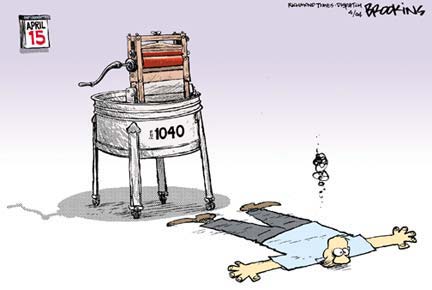
Thanksgiving break. Time to take a break from the wringer that is b-school life. ©

Kellogg has broken for the thanks-giving break. We now get a week away from school distractions before getting back and looking forward to final exams for the quarter. I feel slight relief. But I know that this feeling won't last long. What seemed like an ocean of time to get lots of things done suddenly only looks like a puddle. Here is a preview of what I have to get through over the next 9 days.


Organising meetings with companies. I'm going to be in the Bay Area over the second and third weeks of December. I'm going to be on two Kellogg organised treks, visiting tech companies and VCs in the area. There is some downtime between these treks, so I'd like to use this time to meet further companies that are doing things related to what I plan to do in future. Organising these meetings means emails and phone calls over the coming week.

Getting the school newspaper ready. My one (or main) extracurricular activity while at Kellogg will be running the school newspaper - I'm the paper's Editor-In-Chief for the year 2010. I feel that the paper, The Merger, has been a little too infrequent and that quite a few improvements can be made to the way it looks and how we deliver it. All this requires more work, and importantly, more money. Figuring all this out will be another task over this thanksgiving.

Assignments. There are numerous assignments that are due the week after thanksgiving. Some of these are not worth too much, but others account for a significant portion of our grade. They are going to take some time to get completed.

The social scene continues. Yes, even though I will be in Evanston - the home of Kellogg - all through the break, while many students will be back at home, there are other students who are in the same predicament as me. We've already started planning at least one get together. The school also puts on a thanksgiving dinner on Thursday for anyone who is around, which will also be interesting.

Catching up with school work. I've fallen behind on a few subjects. I need to spend some time over the week catching up with some concepts that have just flown over my head in the last few weeks. This is especially so because final exams are shortly after.

Studying for a waiver exam. I've decided to sit for a waiver exam for the statistics course that most Kellogg students take during the second quarter. I have done some statistics in the past. Having repeated some probability material this quarter that I have done in the past, I feel I should at least attempt the exam so that I don't feel like I'm repeating material again next quarter. Of course, this means revising some statistics concepts that I've not seen in almost ten years. Oh well. We'll just have to see how things pan out.

Read More >>

Media Should Solve A Problem  

Posted by Dino in


The Economist solves a problem for its readers. ©

What need does any particular media publication fulfil? In the face of increasing difficulty that media publications have for charging for content, one of the recent dicussions in the Media & Entertainment Club at Kellogg has centered on thinking about media as we would any other business: what problem is the media publication fixing that the consumer would pay money for?

Too often, editors that run publications do not care about the readers - often printing what they think is best. In contrast, publications that are successful satisfy specific needs of their customers. Two examples that have arisen are:
  • The Economist: For executives, this solves the problem of getting a weekly dose of all the important news, within a one hour period. Ultimately, The Economist helps executives with small talk when meeting people. The Economist's attitude and approach to writing also has a particular appeal.
  • The Wall Street Journal: On the surface, this publication appears similar to the New York Times. However, investment banking professionals read the Wall Street Journal specifically. This is because they know that everyone else in the profession reads it - so to have the same information that they do, these bankers also need to read it. Secondly, for investment bankers, having a copy of the Wall Street Journal on your desk is almost a status symbol - an artefact showing that you are a member of the profession.

In the case of both of these publications, they are able to charge for their content because they satisfy a clear need. B2B media takes this to the extreme. While not as sexy as B2C media, B2B media satisfies essential business needs. Subscription based businesses, such as Lexus Nexus and Bloomberg, add value to the workflow of workers in the world of business.

In a time of desperation for many media publications, the old "what problem does it solve?" insight is perhaps a more obvious cure than most publications realise.

Read More >>

Recapping the Sales Competition  

Posted by Dino in


MIT hosted and ran the sales MBA competition ©.

It has been a whirlwind ride over the last few weeks. I flew into Boston on the weekend of the 17th October to participate in the MBA Sales Competitionrun by MIT. The competition pits contestants from different business schools in sales role plays. The final two rounds in Boston consisted of a 1-on-1 individual role play and a group role-play, where the representatives from each school sold something together. Unfortunately, my 100% score in the preliminary phone-based cold call round, which got me there, counted for nought.

My individual 1-on-1 roleplay was probably best described as "a bit of a disaster". The roleplay centered around selling private wealth management services. I should have known a request for a for a "verbal pitch" actually meant powerpoint. The important lesson for me was that it is often better to give the illusion of over-preparedness, than to actually be over-prepared. The Group round, during which each school sold SAP to a potential customer, went slightly better.

The organisation of the event was quite impressive, and I was surprised to hear how strong MIT Sloan's offerings are in the sales space. Sales is not something most people would associate with the school, but their sales club is the second biggest on campus, they run a conference, offer training from external partners and off course run this competition. MIT Sloan certainly seems to be building a brand for sales.

Overall, it was a good event and I'm glad to have been lucky enough to participate. The logistics would have been a nightmare to organise, with entrants from almost a dozen schools, but the MIT students did a fantastic job getting the event together. Nevertheless, the Kellogg kids might not have won the sales competition, but I'm sure we've sold some of the Sloanies on the idea of on dropping out and applying for Kellogg class of '12 ;-p.

Read More >>

The Knight News Challenge  

Posted by Dino in ,


The Knight News Challenge slogan: "You invent it. We fund it". ©

I've applied for a grant with the Knight Foundation. The Knight News Challenge is a contest that awards up to $5 million each year for innovate digital projects that have a geographical or local element. The business idea that I am pursuing fits the bill and, I've estimated, needs less than $200k to get going.

Although the application is very simple - less than 800 words in total - I've spent an inordinate amount of time on it over the last two months. Writing and redrafting, the process was similar to applying to business school. I believe tens of thousands of applications are made each year, from which a dozen to two dozen projects are eventually funded. The odds are not good, but I figure that it's worth a punt.

I debated whether to make my application under the "open" category, so people could view it and make comments on the Knight News Challenge website; ultimately I opted to apply under the "closed" category. Although seeding copy-cat competition is an issue, the main reason I've applied under the closed category is so I can manage my time. If I applied under the "open" category, I would need to undertake a large marketing effort to get it viewed by lots of people, rated highly and get good comments on it. I'm sure the Foundation will disagree, but social proof (or the lack of) is hard to not pay attention to. I feel my time is better invested actually looking for funding - this is after all why I am applying.

If I am successful in winning the funding that I am seeking, my project will be able to follow a utilitarian path - I will be able to concentrate on producing the best product possible, and it might just help improve the distribution of news in local areas. If I am unsuccessful, I will be relying on purely commercial funding and the focus of the product will likely have to focus on the distribution of news and marketing relating to commercial products.

Although it is a very small step, and potentially will not yield anything, I feel like I've taken my first step to starting a business out of business school. I can now concentrate on the next step.

Read More >>

MIT Sales Competition  

Posted by Dino in


I wonder what we'll be selling for the next round of the competition.  ©

I entered the MIT Sales Competition as a way of learning something about sales - I'll need to develop this skill if I am to have any success with my entrepreneurial aspirations. I never expected that I could actually progress past the initial phase to the final round - but indeed I have. I head to Boston in two weeks.

The competition consists of two rounds. In the first round, entrants from thirteen different schools participated in a cold-call competition. Each participant cold-called a judge, who evaluated our performance. To this judge, we each attempted to sell supply chain management software; the actual scenario was based on a case we were given. From Kellogg, perhaps ten people participated. The top three scoring individuals from each school progress to the next round in Boston. I am fortunate to be among those three for Kellogg!

My strategy for the cold-call paid off: I spent most of the call asking questions and eliciting concerns so I could "pitch" what I was selling against those concerns. It was a bit clunky in places, but the judge responded favourably to my approach. I'm also sure the fact that I smile a lot (and that people say you can "hear" someone smiling) helped build rapport.

The next round takes place in Boston, on Saturday 17th October. It will consist of a 1-on-1 selling role play, as well as a group selling exercise - where the participants from each school sell something as a group. I hadn't anticipated getting this far, so I'm continuing to view this whole thing as a learning experience. Hopefully my fellow Kelloggians and I do well in representing out school.

Read More >>

Self-discipline, motivation and business school.  

Posted by Dino in


Life at business school is not for robots. ©

Follwing pre-term, I'm a few weeks into life at Kellogg. Yet, it feels like a lot longer. It feels like we've all been here for several months. The coursework load has started to ramp up. Clubs are recruiting people for leadership positions. The social scene is still lively. I feel like I'm stretching my time as far out as possible and struggling to keep up. Perhaps the problem is simply self discipline - sticking to what I had planned to do and getting things done. By self discipline, what I really mean is motivation. Yet considerable thought and recent experiences have led me to a time-honored simpler answer.

I would once wake up in the morning and lie in bed for an extra hour. These days, that hour has chopped down to a few minutes. I think this is what is necessary to operate in the business school environment - greater and greater self control of your urges. I'm realising that this is one of the things I need to really master. There is probably just enough time to keep up with only the readings and coursework for classes. Adding clubs, career pursuits, socialising and everything else means there is less and less time for procrastination and distractions. Yet, I find it difficult to not let my mind drift to other things - especially while reading dense text that was probably designed to test your reading stamina. If I am to achieve everything I want in these two years - self discipline will surely be key.

Yet, self-discipline does not have to feel like self-discipline if there is motivation. The stronger the motivation, the quicker things happen and the less procrastination there is. I expect to finish writing this blog post within 30 minutes, for example, simply because I am motivated to keep writing and also motivated to get back to dealing with the rest of the stress of business school. Yet, when it comes to completing assignments for some classes - the motivation is not there: minutes become hours. Soon, I'm already behind and scrambling to keep myself interested to keep going. So beyond self-discipline, if I am to achieve everything I want to out of business school, I need to learn to motivate myself to do those really hard things - those things that are easy to put off. I need to be motivated enough to complete them quickly and move on.

For all this talk of self-control and motivation, I have to admit, though, that there is a simpler device that has been getting me through everything: coffee. I'd been off coffee for several years, but I've picked up the habit again. It seems like such an easy way to stretch out the day. Perhaps this is the simple answer to all my worries? Perhaps with a bit more coffee in my blood, I won't need self-discipline or motivation? Or perhaps I am delusional - I hear that happens when you're body is running only on...

Read More >>